Light that falling on a crowded steppe, an emptied city, a pit in the sand, and desert expanses
Oleksandra Nabieva
co-founder and curator of Ars Mediale
Works by contemporary Ukrainian artists who experiment with the moving image and reflect on media. The selection includes: a film essay (“image diary”); stop-motion animation combined with real footage and historical photographs; found photos and simulation. The program explores the themes of trauma, remembering, and witnessing.
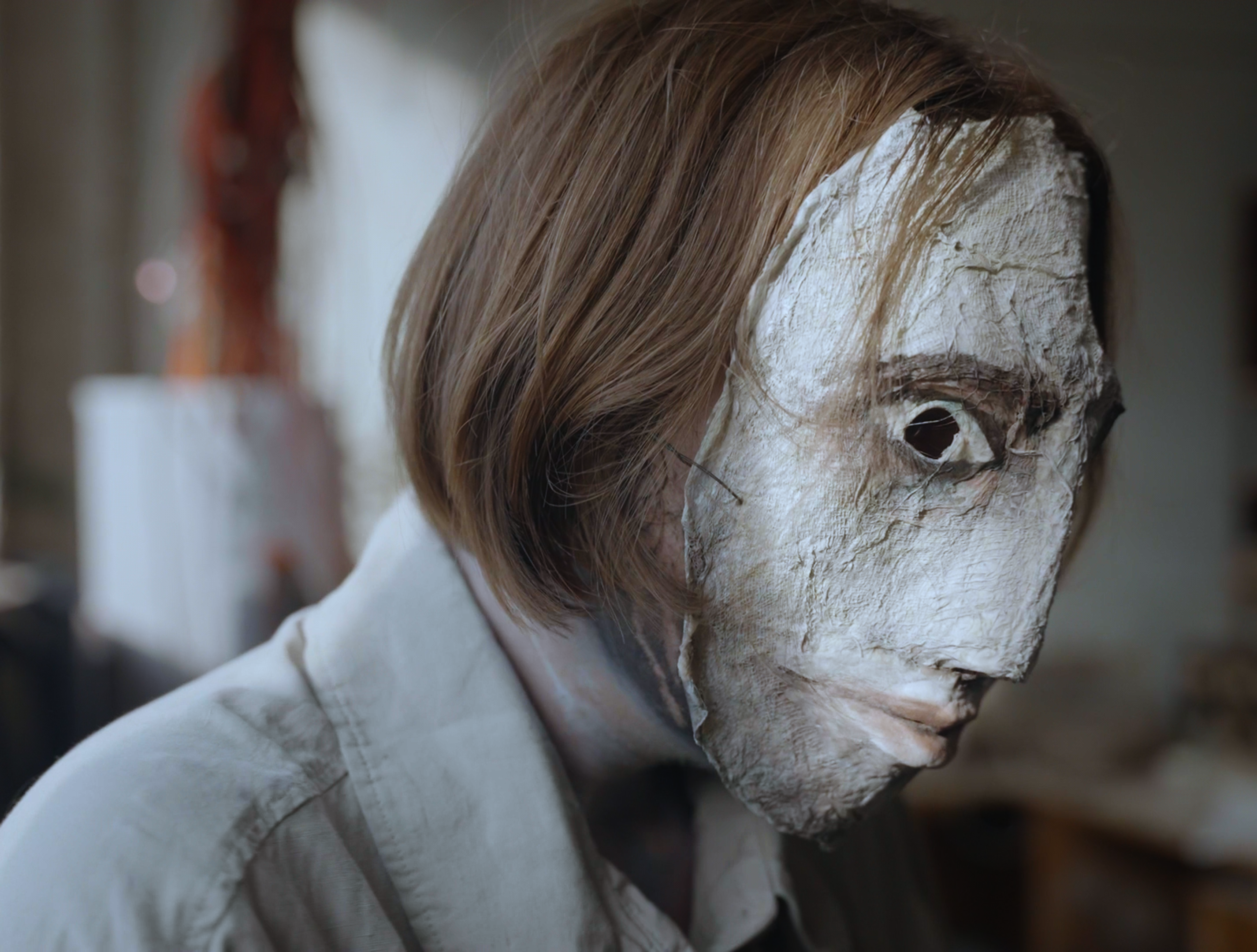
Light that falls makes it possible to capture an image on a lens, a video camera sensor, on film. This light singles out various “sites of memory”. The first among them is the steppe, filled with people torn away from their homes. In the form of the film essay I Am Not Where You Think I Am. I Am Where You Think I Am Not, which the author Salt Salome herself aptly calls an “imagistic diary”, there is an immersion into a personal family history unfolding against the backdrop of the mass deportations of peoples to Kazakhstan in the first half of the 20th century. In the journey into “inner territories”, complex relationships between time and space emerge.
Next, flashes of light single out the streets and squares of a city from which people are disappearing. These places layer a complex history of trauma, in which it becomes possible to try on the roles of both victim and aggressor, as well as to reflect on the most difficult pages of the past, to take responsibility for them. The flashes also reveal a pit in the sand — a mass grave. The Lemberg Machine, a feature-length film by Dana Kavelina, combines animation with real footage and historical photographs, addressing the Lviv pogroms of June–July 1941 and the subsequent unfolding of the Holocaust in the city. Memory here is also a device that intercepts signals from the past, transforming them into moving images and the sounds of forgotten voices. The narrative constructs a hybrid sense organ — a cybernetic organism that captures these analogue signals, attempting to decode them into at least some form of meaning commensurate with the human. The input data prove excessive for the machine of testimony: it deconstructs itself and makes an attempt to model a utopia — a world without violence and suffering — yet reboots to receive new signals.
The last light is of unknown origin. It transforms into fire. “The bodily, the sensory, the ecological, the infrastructural are fused together under this fire and burn out.” The work by the art collective fantastic little splash explores testimony and memory during the war, convincingly shifting focus from the issue of documentation towards continuous collective emotional labour. Memory and testimony in the 2020s, in the “highly automated stage of development of the capital”, are linked primarily to the mediated, opaque algorithms of digital platforms, the production and consumption of images. Compressed, pixelized, blurred, and faded images, instrumentalized by the sensory apparatus of the cyberwar. At this stage, affective machines create networks.
The film see also is an interactive archive of the collected and destroyed images of Russia’s war against Ukraine in 2022–2023, and a unique reflection on an elusive present, created using its own tools and realised as part of the transmediale x Pro Helvetia 2022 residency.
Postal address
© 2025 Arsmediale — Forum of the Experimental Cinema


19/33 Yaroslaviv Val str01034 Kyiv, Ukraine

Light that falling on a crowded steppe, an emptied city, a pit in the sand, and desert expanses
Oleksandra Nabieva
co-founder and curator of Ars Mediale
Works by contemporary Ukrainian artists who experiment with the moving image and reflect on media. The selection includes: a film essay (“image diary”); stop-motion animation combined with real footage and historical photographs; found photos and simulation. The program explores the themes of trauma, remembering, and witnessing.
Light that falls makes it possible to capture an image on a lens, a video camera sensor, on film. This light singles out various “sites of memory”. The first among them is the steppe, filled with people torn away from their homes. In the form of the film essay I Am Not Where You Think I Am. I Am Where You Think I Am Not, which the author Salt Salome herself aptly calls an “imagistic diary”, there is an immersion into a personal family history unfolding against the backdrop of the mass deportations of peoples to Kazakhstan in the first half of the 20th century. In the journey into “inner territories”, complex relationships between time and space emerge.
Next, flashes of light single out the streets and squares of a city from which people are disappearing. These places layer a complex history of trauma, in which it becomes possible to try on the roles of both victim and aggressor, as well as to reflect on the most difficult pages of the past, to take responsibility for them. The flashes also reveal a pit in the sand — a mass grave. The Lemberg Machine, a feature-length film by Dana Kavelina, combines animation with real footage and historical photographs, addressing the Lviv pogroms of June–July 1941 and the subsequent unfolding of the Holocaust in the city. Memory here is also a device that intercepts signals from the past, transforming them into moving images and the sounds of forgotten voices. The narrative constructs a hybrid sense organ — a cybernetic organism that captures these analogue signals, attempting to decode them into at least some form of meaning commensurate with the human. The input data prove excessive for the machine of testimony: it deconstructs itself and makes an attempt to model a utopia — a world without violence and suffering — yet reboots to receive new signals.
The last light is of unknown origin. It transforms into fire. “The bodily, the sensory, the ecological, the infrastructural are fused together under this fire and burn out.” The work by the art collective fantastic little splash explores testimony and memory during the war, convincingly shifting focus from the issue of documentation towards continuous collective emotional labour. Memory and testimony in the 2020s, in the “highly automated stage of development of the capital”, are linked primarily to the mediated, opaque algorithms of digital platforms, the production and consumption of images. Compressed, pixelized, blurred, and faded images, instrumentalized by the sensory apparatus of the cyberwar. At this stage, affective machines create networks.
The film see also is an interactive archive of the collected and destroyed images of Russia’s war against Ukraine in 2022–2023, and a unique reflection on an elusive present, created using its own tools and realised as part of the transmediale x Pro Helvetia 2022 residency.
Postal address
© 2025 Arsmediale — Forum of the Experimental Cinema
19/33 Yaroslaviv Val str01034 Kyiv, Ukraine


Light that falling on a crowded steppe, an emptied city, a pit in the sand, and desert expanses
Oleksandra Nabieva
co-founder and curator of Ars Mediale
Works by contemporary Ukrainian artists who experiment with the moving image and reflect on media. The selection includes: a film essay (“image diary”); stop-motion animation combined with real footage and historical photographs; found photos and simulation. The program explores the themes of trauma, remembering, and witnessing.
Light that falls makes it possible to capture an image on a lens, a video camera sensor, on film. This light singles out various “sites of memory”. The first among them is the steppe, filled with people torn away from their homes. In the form of the film essay I Am Not Where You Think I Am. I Am Where You Think I Am Not, which the author Salt Salome herself aptly calls an “imagistic diary”, there is an immersion into a personal family history unfolding against the backdrop of the mass deportations of peoples to Kazakhstan in the first half of the 20th century. In the journey into “inner territories”, complex relationships between time and space emerge.
Next, flashes of light single out the streets and squares of a city from which people are disappearing. These places layer a complex history of trauma, in which it becomes possible to try on the roles of both victim and aggressor, as well as to reflect on the most difficult pages of the past, to take responsibility for them. The flashes also reveal a pit in the sand — a mass grave. The Lemberg Machine, a feature-length film by Dana Kavelina, combines animation with real footage and historical photographs, addressing the Lviv pogroms of June–July 1941 and the subsequent unfolding of the Holocaust in the city. Memory here is also a device that intercepts signals from the past, transforming them into moving images and the sounds of forgotten voices. The narrative constructs a hybrid sense organ — a cybernetic organism that captures these analogue signals, attempting to decode them into at least some form of meaning commensurate with the human. The input data prove excessive for the machine of testimony: it deconstructs itself and makes an attempt to model a utopia — a world without violence and suffering — yet reboots to receive new signals.
The last light is of unknown origin. It transforms into fire. “The bodily, the sensory, the ecological, the infrastructural are fused together under this fire and burn out.” The work by the art collective fantastic little splash explores testimony and memory during the war, convincingly shifting focus from the issue of documentation towards continuous collective emotional labour. Memory and testimony in the 2020s, in the “highly automated stage of development of the capital”, are linked primarily to the mediated, opaque algorithms of digital platforms, the production and consumption of images. Compressed, pixelized, blurred, and faded images, instrumentalized by the sensory apparatus of the cyberwar. At this stage, affective machines create networks.
The film see also is an interactive archive of the collected and destroyed images of Russia’s war against Ukraine in 2022–2023, and a unique reflection on an elusive present, created using its own tools and realised as part of the transmediale x Pro Helvetia 2022 residency.
Postal address
19/33 Yaroslaviv Val str01034 Kyiv, Ukraine
© 2025 Arsmediale — Forum of the Experimental Cinema
