It All Still Exists
Микита Білий
archivist at the Urban Media Archive of the Center for Urban History
Film screening from the Urban Media Archive of the Center for Urban HistoryThe widespread adoption and accessibility of media technologies in the second half of the twentieth century enabled many people to rethink themselves and the surrounding world through visual forms. Using a photo or film camera no longer required professional training, and the high cost of equipment ceased to be a crucial barrier. By mastering these tools, new authors stepped beyond established norms of professionalism and specialisation, opening up space for experimentation and self-expression.
The creative practices of Orest Bachmaha vividly illustrate this freedom, combining media, technology, and ecological sensitivity with a subtle sense of humor. His key films, made in the 1970s–1980s, are marked by close attention to nature and the small details of the environment, as well as meticulous technical execution. Nature, the relationship with it, and observation of its transformations occupy a central place in his work. Through cinematic language, Orest Bachmaha presents his own way of coexisting with the surrounding world, bringing a personal perspective into the focus of the narrative.
Orest Bachmaha (1943–2021) was an artist, photographer, amateur filmmaker, poet, and inventor from Vynnyky, whose multifaceted practice combined an interest in technology, ecology, and the principle of making everyday objects independently. For a significant part of his life, he worked as a photographer and exhibition designer at the Lviv Art Gallery. Having become fascinated with filmmaking, Orest Bachmaha developed his own 8 mm film camera and also built several modified film projectors with all components and an integrated audio block. His films were digitised and included in the collection of the Urban Media Archive of the Center for Urban History.
Homo Sapiens, 1970s, 1 minute
A concise philosophical film that depicts the timeless problem of the connection and interdependence between humans and nature. Created using collage techniques, it demonstrates the author’s search for a visual language. The music for the film was composed by Pavlo Olefirenko (Pilikayu) in 2020.
Colors of Summer, early 1970s, 13 minutes
This is Orest Bachmaha’s first film. It captures careful observation of changes in the life cycles of flora and fauna taking place in the garden next to his home in Vynnyky. Originally, the film was silent. In 2020, Regina Zhelezniakova (Regina Collage) and Pavlo Olefirenko (Pilikayu) composed music for it.
It All Still Exists, mid-1970s, 17 minutes
This film is Orest Bachmaha’s manifesto, in which he called for the preservation of nature already fifty years ago. The film is accompanied by recordings of birdsong and music by Jean-Michel Jarre, Enzo Caroli, and Antonio Vivaldi, and concludes with poetry by Myroslava Kulyk.
Program curator – Mykyta Bilyi, archivist at the Urban Media Archive of the Center for Urban History.Collage by Mariia Nizhehorodtseva
Postal address
© 2025 Arsmediale — Forum of the Experimental Cinema


19/33 Yaroslaviv Val str01034 Kyiv, Ukraine

It All Still Exists
Микита Білий
archivist at the Urban Media Archive of the Center for Urban History
Film screening from the Urban Media Archive of the Center for Urban HistoryThe widespread adoption and accessibility of media technologies in the second half of the twentieth century enabled many people to rethink themselves and the surrounding world through visual forms. Using a photo or film camera no longer required professional training, and the high cost of equipment ceased to be a crucial barrier. By mastering these tools, new authors stepped beyond established norms of professionalism and specialisation, opening up space for experimentation and self-expression.
The creative practices of Orest Bachmaha vividly illustrate this freedom, combining media, technology, and ecological sensitivity with a subtle sense of humor. His key films, made in the 1970s–1980s, are marked by close attention to nature and the small details of the environment, as well as meticulous technical execution. Nature, the relationship with it, and observation of its transformations occupy a central place in his work. Through cinematic language, Orest Bachmaha presents his own way of coexisting with the surrounding world, bringing a personal perspective into the focus of the narrative.
Orest Bachmaha (1943–2021) was an artist, photographer, amateur filmmaker, poet, and inventor from Vynnyky, whose multifaceted practice combined an interest in technology, ecology, and the principle of making everyday objects independently. For a significant part of his life, he worked as a photographer and exhibition designer at the Lviv Art Gallery. Having become fascinated with filmmaking, Orest Bachmaha developed his own 8 mm film camera and also built several modified film projectors with all components and an integrated audio block. His films were digitised and included in the collection of the Urban Media Archive of the Center for Urban History.
Homo Sapiens, 1970s, 1 minute
A concise philosophical film that depicts the timeless problem of the connection and interdependence between humans and nature. Created using collage techniques, it demonstrates the author’s search for a visual language. The music for the film was composed by Pavlo Olefirenko (Pilikayu) in 2020.
Colors of Summer, early 1970s, 13 minutes
This is Orest Bachmaha’s first film. It captures careful observation of changes in the life cycles of flora and fauna taking place in the garden next to his home in Vynnyky. Originally, the film was silent. In 2020, Regina Zhelezniakova (Regina Collage) and Pavlo Olefirenko (Pilikayu) composed music for it.
It All Still Exists, mid-1970s, 17 minutes
This film is Orest Bachmaha’s manifesto, in which he called for the preservation of nature already fifty years ago. The film is accompanied by recordings of birdsong and music by Jean-Michel Jarre, Enzo Caroli, and Antonio Vivaldi, and concludes with poetry by Myroslava Kulyk.
Program curator – Mykyta Bilyi, archivist at the Urban Media Archive of the Center for Urban History.Collage by Mariia Nizhehorodtseva
Postal address
© 2025 Arsmediale — Forum of the Experimental Cinema
19/33 Yaroslaviv Val str01034 Kyiv, Ukraine


It All Still Exists
Mykyta Bilyi
archivist at the Urban Media Archive of the Center for Urban History
Film screening from the Urban Media Archive of the Center for Urban HistoryThe widespread adoption and accessibility of media technologies in the second half of the twentieth century enabled many people to rethink themselves and the surrounding world through visual forms. Using a photo or film camera no longer required professional training, and the high cost of equipment ceased to be a crucial barrier. By mastering these tools, new authors stepped beyond established norms of professionalism and specialisation, opening up space for experimentation and self-expression.
The creative practices of Orest Bachmaha vividly illustrate this freedom, combining media, technology, and ecological sensitivity with a subtle sense of humor. His key films, made in the 1970s–1980s, are marked by close attention to nature and the small details of the environment, as well as meticulous technical execution. Nature, the relationship with it, and observation of its transformations occupy a central place in his work. Through cinematic language, Orest Bachmaha presents his own way of coexisting with the surrounding world, bringing a personal perspective into the focus of the narrative.
Orest Bachmaha (1943–2021) was an artist, photographer, amateur filmmaker, poet, and inventor from Vynnyky, whose multifaceted practice combined an interest in technology, ecology, and the principle of making everyday objects independently. For a significant part of his life, he worked as a photographer and exhibition designer at the Lviv Art Gallery. Having become fascinated with filmmaking, Orest Bachmaha developed his own 8 mm film camera and also built several modified film projectors with all components and an integrated audio block. His films were digitised and included in the collection of the Urban Media Archive of the Center for Urban History.
Homo Sapiens, 1970s, 1 minute
A concise philosophical film that depicts the timeless problem of the connection and interdependence between humans and nature. Created using collage techniques, it demonstrates the author’s search for a visual language. The music for the film was composed by Pavlo Olefirenko (Pilikayu) in 2020.
Colors of Summer, early 1970s, 13 minutes
This is Orest Bachmaha’s first film. It captures careful observation of changes in the life cycles of flora and fauna taking place in the garden next to his home in Vynnyky. Originally, the film was silent. In 2020, Regina Zhelezniakova (Regina Collage) and Pavlo Olefirenko (Pilikayu) composed music for it.
It All Still Exists, mid-1970s, 17 minutes
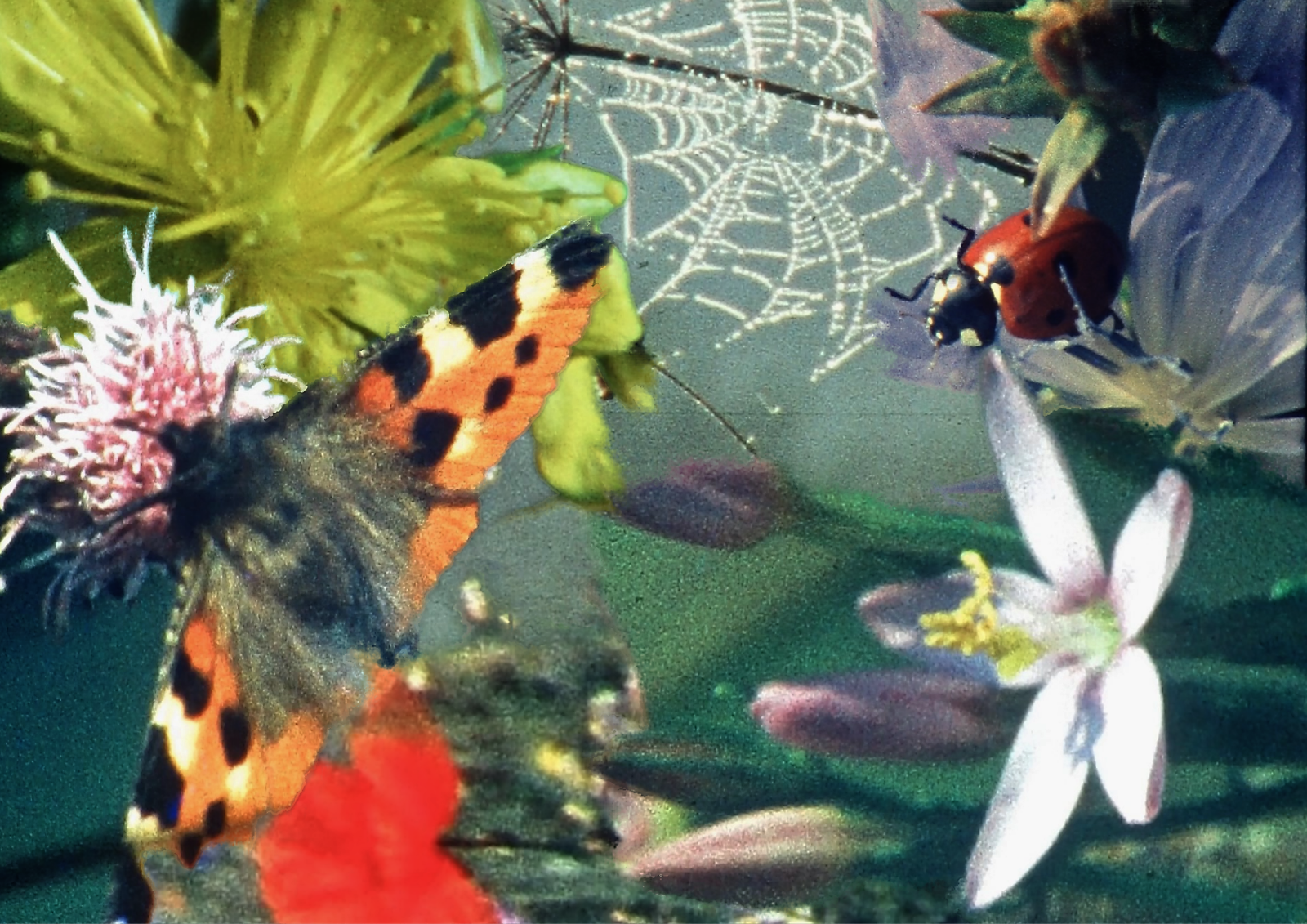
This film is Orest Bachmaha’s manifesto, in which he called for the preservation of nature already fifty years ago. The film is accompanied by recordings of birdsong and music by Jean-Michel Jarre, Enzo Caroli, and Antonio Vivaldi, and concludes with poetry by Myroslava Kulyk.
Program curator – Mykyta Bilyi, archivist at the Urban Media Archive of the Center for Urban History.Collage by Mariia Nizhehorodtseva
Postal address
19/33 Yaroslaviv Val str01034 Kyiv, Ukraine
© 2025 Arsmediale — Forum of the Experimental Cinema
